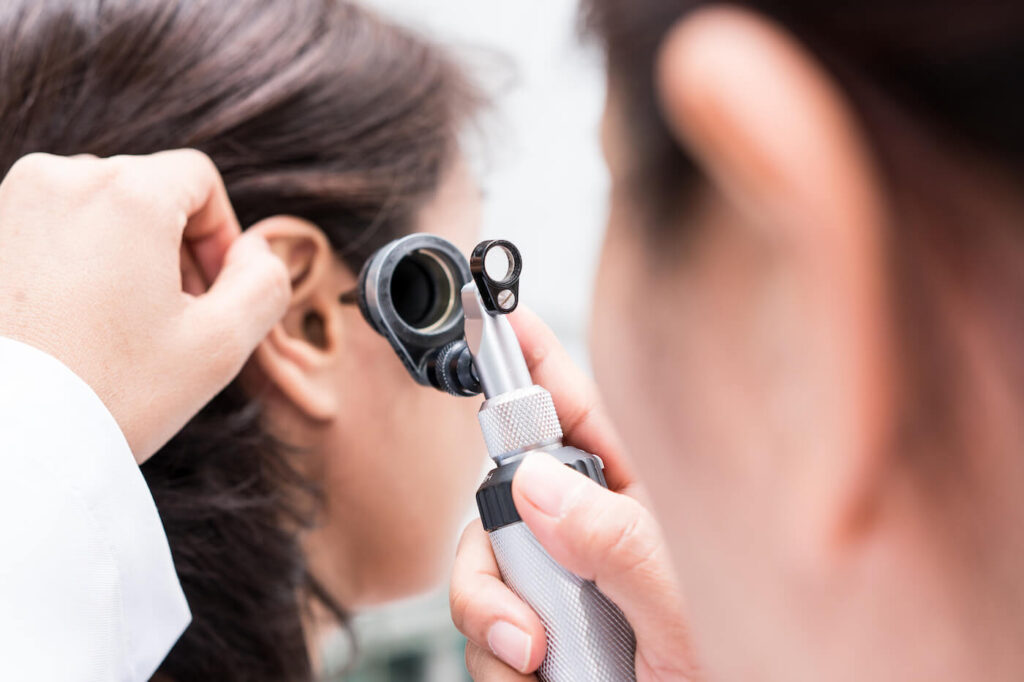

In our previous post, we discussed two summer activities that can cause permanent hearing damage and highlighted how easy it is to leave a fun day outdoors with a lasting issue. However, hearing loss isn’t the only consequence that can accompany you home from a concert, a boat trip, or a parade.
For many individuals, this lingering reminder manifests as a ringing, buzzing, or hissing sound that won’t go away. This condition is known as tinnitus, and if you’ve experienced it following a loud summer, you’re definitely not alone.
What Is Tinnitus, Really?
Tinnitus is the perception of sound when no external noise is present. It can ring, buzz, click, roar, or whine, and it may come and go or stick around the clock. It isn’t a disease on its own – it’s often a signal that something has changed in your auditory system, frequently noise-related hearing damage.
Tinnitus and hearing loss often go hand in hand, which is why one of the most effective tools for managing tinnitus is the same device people associate with hearing loss: a hearing aid.
How Hearing Aids Ease Tinnitus Symptoms
Hearing aids won’t cure tinnitus, but for many people they make it far easier to live with. Here’s how.
- They turn up the world around you. Tinnitus feels loudest in quiet moments, when your brain has nothing else to focus on. By amplifying the everyday sounds you’ve been missing conversation, footsteps, the hum of a room – hearing aids reduce the contrast between silence and that internal ringing, so it doesn’t stand out as much.
- They take the strain out of listening. If you struggle to hear, your brain needs to work overtime to fill in the gaps, and that fatigue can make tinnitus feel worse. Clearer hearing reduces effort, which often reduces the ringing.
- They help break the stress cycle. Tinnitus and stress feed each other – the ringing causes anxiety, and anxiety makes the ringing louder. By easing communication and offering on-demand relief, hearing aids help quiet that loop.
Relief Starts With an Evaluation
If you experience persistent ringing in your ears, the most important and straightforward step you can take is to schedule a hearing evaluation with the audiologists at ENTOne. Our thorough assessment will determine if hearing loss is contributing to your tinnitus and will help us recommend the best approach for you.
The ENTOne audiologists are experienced in fitting nearly all hearing aid brands, but they usually recommend and work with Oticon, Starkey, and Phonak. They will assist each patient in selecting the option that best suits their individual needs.
It’s important to note that every case of tinnitus is unique, and so are the solutions available. The good news is that you don’t have to endure the ringing any longer. With the right support, most people can find genuine and lasting relief.
Concerned about your hearing? Schedule a hearing evaluation with ENTOne today. Call our office or book online, and let our specialists help you protect what matters.
Disclaimer: This is general information and not a substitute for professional medical advice. All advice and suggestions offered via the website or newsletters should be discussed with a physician before implementation. Always consult a physician for specific guidance, especially if you have pre-existing conditions. SurgOne, PC, and ENTOne PC are not liable for any adverse reactions that may occur from implementing the advice or suggestions that appear here.