
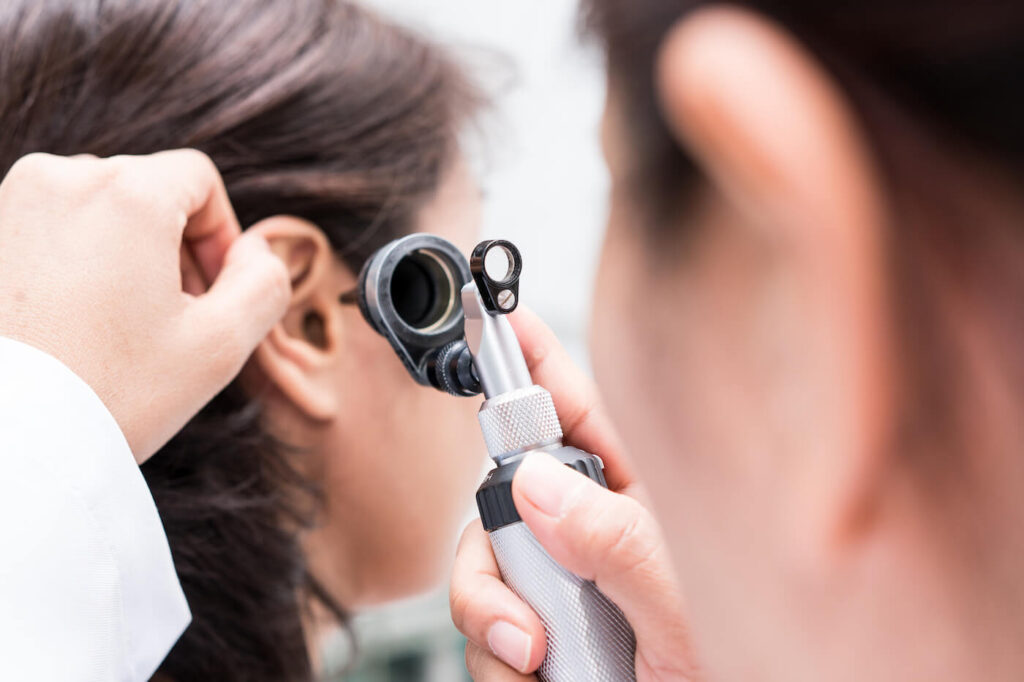
October is Audiology Awareness Month, a good time to talk about a hearing problem that deserves more attention. Sudden sensorineural hearing loss (SSNHL), sometimes called sudden deafness, is a medical emergency. How quickly you act can significantly affect how much hearing you recover.
What Is Sudden Hearing Loss?
SSNHL is a rapid loss of hearing, usually in one ear, that happens all at once or over a few days. It occurs when the inner ear or the nerve that carries sound to the brain is affected. Many people notice it when they wake up. Others notice it when they switch their phone to the other ear and realize something isn’t right.
Common signs are:
● Hearing that suddenly sounds muffled or dull in one ear
● A feeling of fullness or pressure in the ear
● Ringing, buzzing, or roaring sounds (tinnitus)
● Dizziness or a sense of imbalance
● Trouble following conversations, especially in noisy places
Why It’s Easy to Overlook.
Here’s the tricky part. That plugged-up feeling can easily be mistaken for earwax, a cold, or allergy congestion. Because those causes are so common, people sometimes mistake sudden hearing loss for them, even in primary care and urgent care settings. You might be told to try a decongestant or ear drops and wait.
The problem is that waiting costs time, and with SSNHL, time matters. Earwax and congestion block sound from reaching the inner ear. SSNHL is different. The problem lies in the inner ear or the hearing nerve itself, and distinguishing between the two requires a proper hearing test.
Why Every Day Counts.
Treatment for sudden hearing loss, most often a course of steroids, tends to work best when it starts early. We want patients experiencing symptoms of SSNHL to be evaluated as soon as symptoms appear, ideally within the two weeks of symptoms onset. The longer treatment is delayed, the lower the chances of a meaningful recovery. Some people do regain hearing on their own, but there’s no way to know in advance who will. Waiting to see what happens is a gamble with your hearing.
That’s why you should never leave sudden hearing loss alone to see if it improves. If your hearing changes suddenly, treat it as urgent.
What to Do If It Happens to You.
● Don’t wait. Call ENTOne right away, preferably the same day.
● Ask for a hearing test. A comprehensive hearing evaluation is the key to identifying SSNHL and ruling out simpler causes. ENTOne will make sure a hearing test is performed the same day.
● Speak up. If you’re seen somewhere else first, make sure the provider knows your hearing changed suddenly, and ask whether a hearing test and ENT referral make sense.
● Follow through. If treatment is started, follow-up hearing tests help track your recovery.
How ENTOne Can Help.
At ENTOne, our providers and audiology team work together under one roof, so we can quickly evaluate your hearing and ears and start treatment without needless delays. Sudden hearing loss is frightening, but you don’t have to face it alone. The ENTOne Difference can help.
Have you noticed a sudden change in your hearing? Don’t wait. Call ENTOne today at 303.798.1309 or email frontdesk@entonecare.com to schedule an evaluation.
Disclaimer: This is general information and not a substitute for professional medical advice. All advice and suggestions offered via the website or newsletters should be discussed with a physician before implementation. Always consult a physician for specific guidance, especially if you have pre-existing conditions. SurgOne, PC, and ENTOne PC are not liable for any adverse reactions that may occur from implementing the advice or suggestions that appear here.