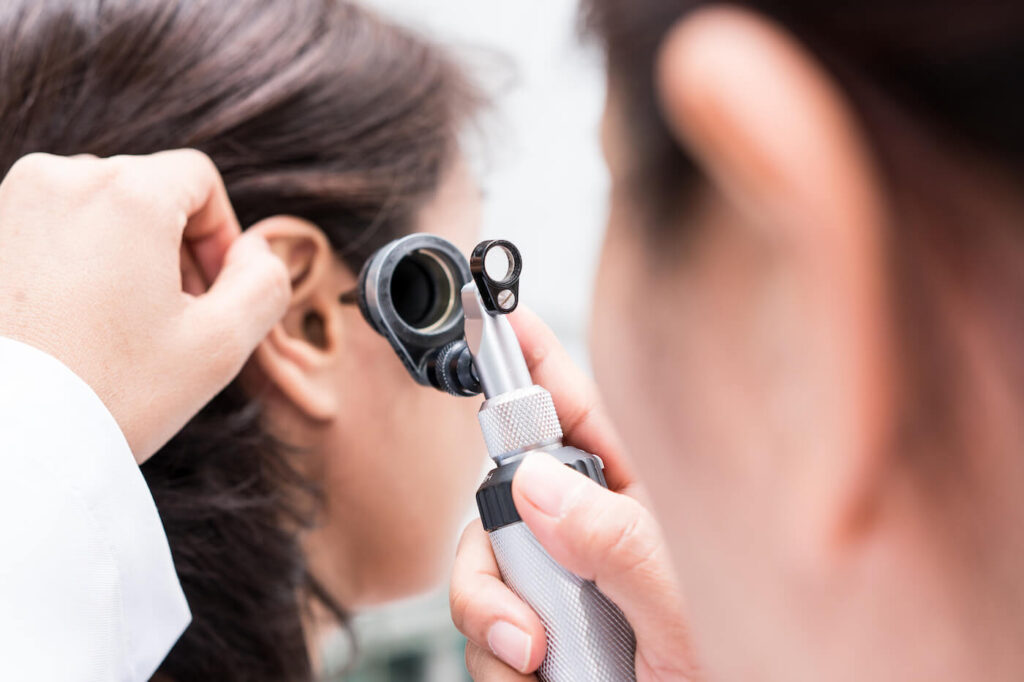

Research links untreated hearing loss to cognitive decline, including dementia. Recognizing this connection is key to protecting your brain health.
The Hearing-Brain Connection
Hearing is a brain activity. With hearing loss, your brain works harder to decode sounds from incomplete information. Studies show that those with untreated hearing loss decline cognitively faster than those with normal hearing or hearing aids.
The Numbers Are Striking
Research paints a clear picture of the hearing-cognition connection:
A Johns Hopkins study found hearing loss in nearly 80% of people with Alzheimer’s and dementia, rising to 94% in those over 85.
Additional research from Johns Hopkins University and the National Institute on Aging found that:
- Mild hearing loss doubles the risk of dementia.
- Moderate hearing loss triples the risk.
- Severe hearing loss increases the risk fivefold.
Perhaps most concerning: despite these compelling connections, only about 22% of those with hearing loss use hearing aids – pointing to a significant gap in care that may be contributing to preventable cognitive decline.
Why Does Hearing Loss Affect the Brain?
- Cognitive Load: Straining to decode sounds leaves fewer resources for memory and thinking, speeding cognitive aging.
- Brain Structure Changes: Hearing loss causes shrinkage in areas that process sound and speech, with faster atrophy in memory regions.
- Social Isolation: Difficulty hearing leads people to withdraw from social activities, which is itself a major risk factor for cognitive decline.
- Reduced Stimulation: Hearing loss means the auditory cortex receives less input, leading to cognitive decline.
Early Intervention Is Critical
Untreated hearing loss speeds brain deterioration and raises dementia risk. Early action preserves cognition. Hearing aid users show better memory, focus, and social engagement.
For older adults, early hearing checks are essential. With 94% of those over 85 with dementia also losing hearing, there is a risk to brain health.
If you’re over 60, get a baseline hearing test – it’s as important as blood pressure or cholesterol. Don’t join the 78% untreated. Modern hearing solutions are advanced and discreet.
Protect Your Brain Today
With 80% of Alzheimer’s patients having hearing loss but only 22% using aids, many miss a critical chance. Addressing hearing loss early protects cognition and may lower dementia risk.
For older adults, early hearing evaluations are essential preventive care for brain health.
Take control of your brain health. Contact ENTOne 303.798.1309 now to schedule your comprehensive hearing evaluation. Early detection and intervention can make a critical difference. Act today to safeguard your cognitive future.
Disclaimer: This is general information and not a substitute for professional medical advice. All advice and suggestions offered via the website or newsletters should be discussed with a physician before implementation. Always consult a physician for specific guidance, especially if you have pre-existing conditions. SurgOne, PC, and ENTOne PC are not liable for any adverse reactions that may occur from implementing the advice or suggestions that appear here.